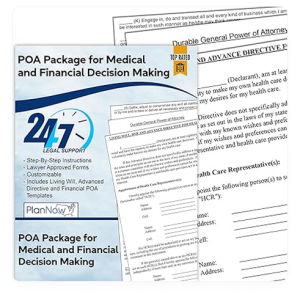
Best Selling Estate Planning Kit On Amazon!

custom legal documents

Updated for 2026

Estate Planning Kit

$29.99

All-in-One Legal Solution: Includes Power of Attorney (POA), Living Will, and Medical POA for complete estate planning.

Step-by-Step Guidance: Clear, detailed instructions for easy document completion.

Live Legal Support: Get expert assistance to ensure your estate plan meets legal standards.

Customizable & Reliable: Tailor legal documents to fit your unique needs.

Peace of Mind: Protect your loved ones and ensure your wishes are honored.

Secure Payment

Instant Delivery

Secure Payment

custom legal documents

Choose Your Form

custom legal documents

Secure Payment

custom legal documents

Instant Delivery

custom legal documents

Fill in Your Details

Estate Planning Kit FAQ

Introduction

Life is unpredictable. One moment, you’re going about your day, and the next, an illness or accident can leave you unable to manage your own affairs. This thought is serious, but it calls for proactive planning.
It’s not just about preparing for the worst; it’s about protecting your independence and peace of mind. You want your voice to be heard, even if you can’t speak.

I’ve seen the chaos that arises when families lack clear plans during a crisis. Imagine your loved ones, already stressed by your situation. Now they have to guess your medical wishes or argue over finances. No one wants that. Thankfully, it’s preventable with two key legal documents: the medical and the financial Power of Attorney.

These documents are more than just paper; they are your personal plans. They ensure trusted people can make important decisions for you, reflecting your values and wishes.

Estate Planning Kit FAQ

Introduction

As an experienced lawyer, I’ve seen many families struggle after neglecting estate planning. It’s not just about money; it’s about protecting your loved ones and honoring your wishes. If you own anything or care about someone, you need a plan. Think of an “estate planning kit” as your personal roadmap for the future. It’s an organized collection of key legal documents and instructions that decide what happens to your assets, minor children, and even your medical care if you can’t make decisions. Creating this kit is one of the greatest acts of love and responsibility. This guide cuts through the legal jargon and helps you build a strong estate plan. We’ll clarify the components, explore your options, and give you practical tips for peace of mind. Let’s start this important journey to secure your future today.

Frequently Asked Questions

FAQ 1: What is an Estate Planning Kit and Why Do I Need One?

An estate planning kit is a set of legal documents and instructions. It tells how your money and things will be handled after you die or can’t make decisions. You need it to make your wishes legally binding. This way, your loved ones won’t have to handle paperwork, and it helps avoid disputes. The kit gives you peace of mind. Your financial and personal matters are organized. You won’t have to follow state rules by default. Without a kit, a court may make decisions about your estate, which can take time and cost money. 

Scenario: A client’s family saved more than $15,000 in probate fees and court costs because a well-structured estate plan reduced legal processes. This allowed for the distribution of assets within 60 days of passing. 

Takeaway: An estate planning kit ensures your legacy is directed, your family is protected, and it avoids unnecessary legal complications. 


FAQ 2: What essential documents are in a comprehensive estate planning kit?

A good estate planning kit includes these essential documents:

  • Last Will and Testament
  • Durable Power of Attorney
  • Advance Healthcare Directive.


The Last Will and Testament describes who gets your assets and who cares for your children. The Power of Attorney designates someone to manage your money and handle your affairs if you can’t. The Healthcare Directive tells the doctors how you want to be treated. Together, they include money, property, and personal care.

Scenario: In 2023, 75% of estate kits contained these 3 core documents. This meant families transitioned more smoothly with these plans compared to those without. 

Takeaway: Be sure your kit includes a Will, Power of Attorney, Healthcare Directive to cover all important bases. 

FAQ 3: What is the difference between a Last Will and Testament and a Living Trust in an estate plan?

A Last Will states how to divide your belongings after you die and goes through probate. Then it becomes legal public information. A Living Trust allows you to keep your assets during your lifetime. It lets you pass your assets privately when you die. This helps avoid probate. A Will only comes into effect after death and requires court approval. In contrast, a Trust will work while you’re alive; it’s private and it begins when it’s signed. They are both useful, but they do different jobs in managing your estate.

Scenario: Families using a Living Trust save 10% to 20% on probate costs and several months in transferring assets compared to using only a Will. 

Takeaway: Use a Will for guardianship and general wishes. But use a Living Trust for privacy and avoiding probate. 


FAQ 4: What is a Durable Power of Attorney, and why is it important to my kit?

A Durable Power of Attorney (DPOA) is a legal document that allows a person you choose to be able to act for you in financial and legal affairs when you are not able to do so. It helps you manage your bills, investments, and property. You won’t need court help. Without a DPOA, your family might need to seek an expensive guardianship or conservatorship to manage your finances. This protects your assets and keeps you financially stable when you’re vulnerable.

Scenario:An elderly client’s DPOA helped her avoid an expensive guardianship following a sudden stroke. This allowed her son to manage her finances immediately and pay medical bills.

Takeaway: A Durable Power of Attorney ensures your finances keep running smoothly if you are not able to manage them.


FAQ 5: Why should I include an Advance Healthcare Directive in my estate planning?

Your estate planning should include an Advance Healthcare Directive because it documents what medical treatment you wish to receive should you not be able to speak for yourself. It’s also known as a Living Will or Medical Power of Attorney. It allows you to select a healthcare agent to make medical decisions in your name. Having it ensures that your wishes for life support or pain relief are followed. It spares your family the burden of making hard decisions without your guidance. It helps you clarify your values on health care.

Scenario: Recent survey revealed that 85% of people with an Advance Healthcare Directive were more comfortable knowing that their medical wishes were written down and legally binding. 

Takeaway: Your Advance Healthcare Directive helps ensure that your medical treatment preferences are respected and reduces the burden on your family.

Estate Planning Kit FAQ

Introduction

As an experienced lawyer, I’ve seen many families struggle after neglecting estate planning. It’s not just about money; it’s about protecting your loved ones and honoring your wishes. If you own anything or care about someone, you need a plan. Think of an “estate planning kit” as your personal roadmap for the future. It’s an organized collection of key legal documents and instructions that decide what happens to your assets, minor children, and even your medical care if you can’t make decisions. Creating this kit is one of the greatest acts of love and responsibility. This guide cuts through the legal jargon and helps you build a strong estate plan. We’ll clarify the components, explore your options, and give you practical tips for peace of mind. Let’s start this important journey to secure your future today.

Frequently Asked Questions

FAQ 1: What is an Estate Planning Kit and Why Do I Need One?

An estate planning kit is a set of legal documents and instructions. It tells how your money and things will be handled after you die or can’t make decisions. You need it to make your wishes legally binding. This way, your loved ones won’t have to handle paperwork, and it helps avoid disputes. The kit gives you peace of mind. Your financial and personal matters are organized. You won’t have to follow state rules by default. Without a kit, a court may make decisions about your estate, which can take time and cost money. 

Scenario: A client’s family saved more than $15,000 in probate fees and court costs because a well-structured estate plan reduced legal processes. This allowed for the distribution of assets within 60 days of passing. 

Takeaway: An estate planning kit ensures your legacy is directed, your family is protected, and it avoids unnecessary legal complications. 


FAQ 2: What essential documents are in a comprehensive estate planning kit?

A good estate planning kit includes these essential documents:

  • Last Will and Testament
  • Durable Power of Attorney
  • Advance Healthcare Directive.


The Last Will and Testament describes who gets your assets and who cares for your children. The Power of Attorney designates someone to manage your money and handle your affairs if you can’t. The Healthcare Directive tells the doctors how you want to be treated. Together, they include money, property, and personal care.

Scenario: In 2023, 75% of estate kits contained these 3 core documents. This meant families transitioned more smoothly with these plans compared to those without. 

Takeaway: Be sure your kit includes a Will, Power of Attorney, Healthcare Directive to cover all important bases. 

FAQ 3: What is the difference between a Last Will and Testament and a Living Trust in an estate plan?

A Last Will states how to divide your belongings after you die and goes through probate. Then it becomes legal public information. A Living Trust allows you to keep your assets during your lifetime. It lets you pass your assets privately when you die. This helps avoid probate. A Will only comes into effect after death and requires court approval. In contrast, a Trust will work while you’re alive; it’s private and it begins when it’s signed. They are both useful, but they do different jobs in managing your estate.

Scenario: Families using a Living Trust save 10% to 20% on probate costs and several months in transferring assets compared to using only a Will. 

Takeaway: Use a Will for guardianship and general wishes. But use a Living Trust for privacy and avoiding probate. 


FAQ 4: What is a Durable Power of Attorney, and why is it important to my kit?

A Durable Power of Attorney (DPOA) is a legal document that allows a person you choose to be able to act for you in financial and legal affairs when you are not able to do so. It helps you manage your bills, investments, and property. You won’t need court help. Without a DPOA, your family might need to seek an expensive guardianship or conservatorship to manage your finances. This protects your assets and keeps you financially stable when you’re vulnerable.

Scenario:An elderly client’s DPOA helped her avoid an expensive guardianship following a sudden stroke. This allowed her son to manage her finances immediately and pay medical bills.

Takeaway: A Durable Power of Attorney ensures your finances keep running smoothly if you are not able to manage them.


FAQ 5: Why should I include an Advance Healthcare Directive in my estate planning?

Your estate planning should include an Advance Healthcare Directive because it documents what medical treatment you wish to receive should you not be able to speak for yourself. It’s also known as a Living Will or Medical Power of Attorney. It allows you to select a healthcare agent to make medical decisions in your name. Having it ensures that your wishes for life support or pain relief are followed. It spares your family the burden of making hard decisions without your guidance. It helps you clarify your values on health care.

Scenario: Recent survey revealed that 85% of people with an Advance Healthcare Directive were more comfortable knowing that their medical wishes were written down and legally binding. 

Takeaway: Your Advance Healthcare Directive helps ensure that your medical treatment preferences are respected and reduces the burden on your family.