Frequently Asked Questions
FAQ 1: What is a Young Adult Legal Forms Packet, and who should have one?
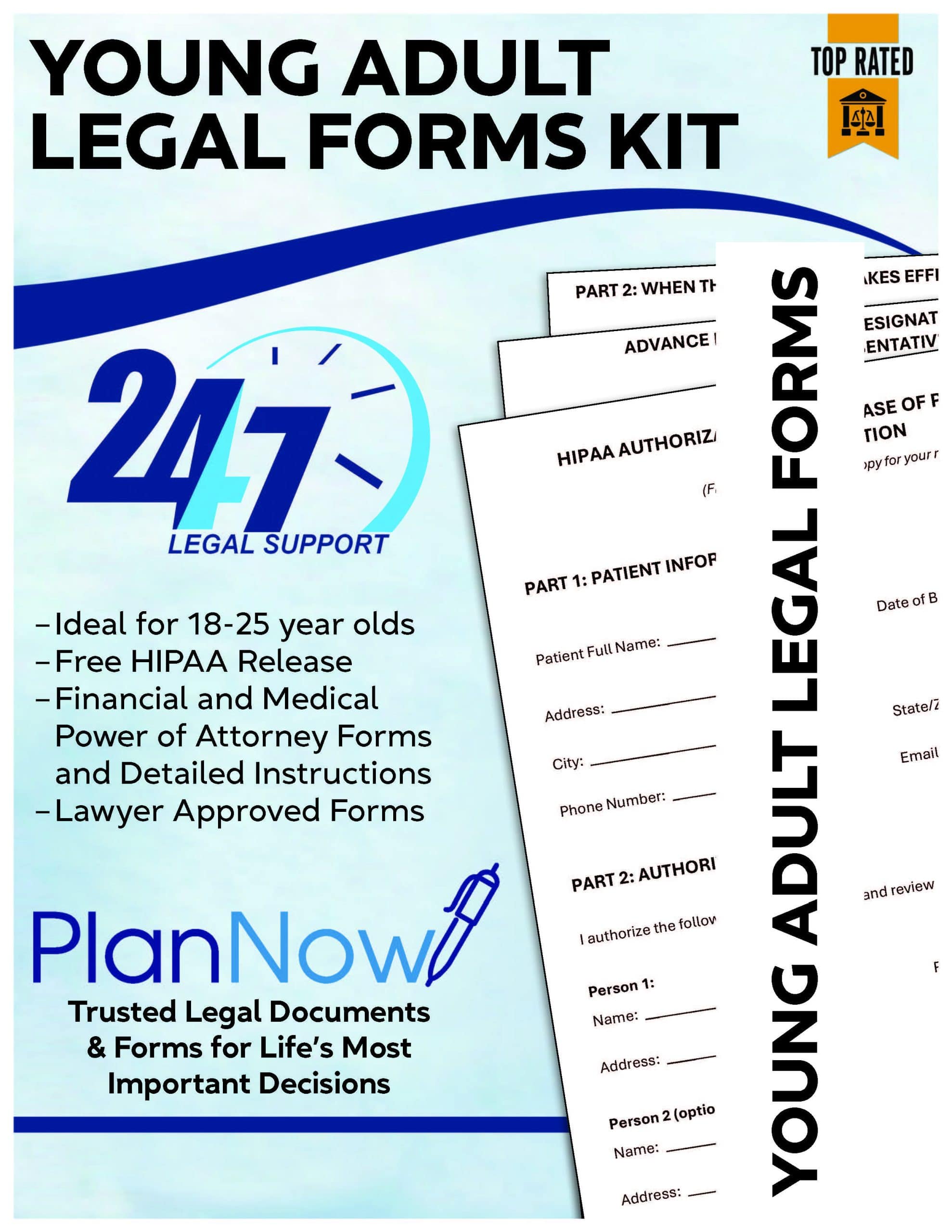
The Young Adult Legal Forms Packet is a collection of forms designed to help adults ages 18 and older prepare for situations in which they may need assistance with medical information, healthcare decisions, or financial matters. It is especially helpful for young adults attending college, living away from home, traveling, beginning a career, or becoming financially independent.
Once someone reaches adulthood, a parent or guardian may not automatically be authorized to access private medical records, make healthcare decisions, or manage financial affairs. These forms allow the young adult to name trusted people who may assist under the circumstances described in each document.
Scenario: A college student experiences a medical emergency while living away from home. Because the appropriate forms were completed and shared in advance, the people selected by the student have documentation of their authority to access information or assist with decisions.
Takeaway: The packet helps young adults prepare for emergencies while remaining in control of who may assist with their medical and financial affairs.
FAQ 2: What forms are included in the Young Adult Legal Forms Packet?
The packet contains three essential forms:
- HIPAA Authorization for Release of Protected Health Information
- Advance Directive and Designation of Healthcare Representative
- Durable Power of Attorney for Financial Decisions
The HIPAA Authorization identifies the people who may receive and review medical records. The Advance Directive names representatives who may make healthcare and treatment decisions if the young adult becomes unable to make or communicate those decisions. The Durable Financial Power of Attorney names agents who may manage authorized financial and legal matters.
The packet also provides completion instructions. Every applicable blank should be completed clearly. The Advance Directive and Durable Financial Power of Attorney must be signed before a notary, as directed in the packet. Signed originals should be stored safely, and copies should be provided to the appropriate doctors, agents, and representatives.
Scenario: A young adult preparing to move away for school completes all three forms, keeps the signed originals in a secure location, and gives copies to the trusted people named in the documents.
Takeaway: Together, the three forms address medical-record access, healthcare decision-making, and financial assistance.
FAQ 3: What does the HIPAA Authorization allow someone to do?
The HIPAA Authorization allows a young adult to name trusted people who may receive and review protected medical information. The form can cover treatment records, diagnoses, medical notes, prescriptions, and other information related to the individual’s care.
The young adult may name more than one authorized recipient. The form also allows the individual to exclude certain sensitive information, including psychiatric, mental health, drug or alcohol treatment, communicable disease, and HIV/AIDS records. An expiration date may be entered, or the individual may indicate that the authorization does not expire.
The HIPAA Authorization permits access to medical information, but it does not by itself give the recipient authority to make healthcare decisions. That authority is addressed in the Advance Directive.
Scenario: A young adult is receiving medical care away from home and wants a parent or another trusted person to speak with the healthcare provider and review relevant records. A completed HIPAA Authorization documents that permission.
Takeaway: The HIPAA Authorization helps ensure that only the people selected by the young adult are authorized to receive protected medical information.
FAQ 4: What is the Advance Directive and Designation of Healthcare Representative?
The Advance Directive allows a young adult to designate trusted representatives to make healthcare and medical-treatment decisions if the individual becomes unable to make or communicate those decisions. The form provides space for primary and alternate representatives.
Subject to the document’s terms, a representative may access medical records, select or dismiss healthcare providers, consent to or refuse treatment, arrange a move to another facility, authorize pain-relief measures, and be present during medical procedures or examinations.
The form also addresses life-sustaining treatment, artificial nutrition, do-not-resuscitate orders, comfort care, and organ or tissue donation. The young adult retains the right to revoke the authority granted to the representatives.
Scenario: After an unexpected accident, a young adult is temporarily unable to communicate. The completed Advance Directive identifies the trusted representatives authorized to communicate with medical providers and make decisions based on the individual’s documented wishes.
Takeaway: An Advance Directive communicates the young adult’s healthcare preferences and identifies who may act if the individual cannot speak for themselves.
FAQ 5: What does the Durable Power of Attorney for Financial Decisions cover?
The Durable Power of Attorney allows a young adult to name trusted agents who may manage authorized financial and legal matters. The young adult may choose whether the authority begins immediately upon signing or only after incapacity.
The document covers matters such as:
- Real estate
- Bank and financial accounts
- Stocks, bonds, and investments
- Insurance policies and annuities
- Government benefits
- Retirement accounts and pension plans
- Tax filings and tax matters
- Legal claims
- Digital assets and electronic accounts
- Certain transfers to a revocable trust
- Other authorized financial and legal matters
The form also places limits on the agent. For example, an agent may not use the young adult’s assets to pay personal debts, change designated beneficiaries, or make gifts to themselves unless specifically authorized.
Scenario: A young adult becomes temporarily incapacitated or is otherwise unable to manage an urgent financial matter. The designated agent can use the completed document to act within the authority granted by the young adult.
Takeaway: A Durable Financial Power of Attorney allows a trusted person to handle authorized financial matters without taking control away from the young adult beyond the document’s stated terms.
Because requirements vary by state and individual circumstances, the forms should be completed carefully and reviewed with a licensed attorney in the appropriate jurisdiction when legal guidance is needed.